

Corals Up Close in South Florida
Corals are beautiful structures that can be found in shallow tropical waters. The Great Barrier Reef by Australia is the biggest coral reef on Earth, and considered one of the seven wonders of the world. They are colourful, vibrant, and full of life and movement. But what exactly are they, and where can you see them in South Florida?
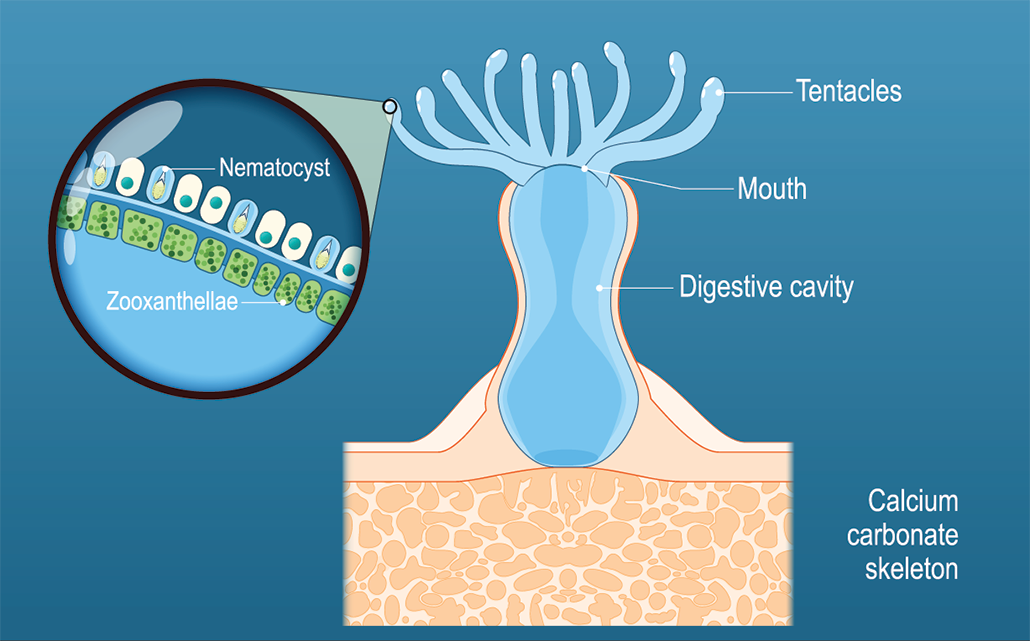
Contrary to popular belief, corals are not plants. Instead, they are a type of animal that doesn’t have a backbone–animals like these are called invertebrates. Individually, corals are called polyps which comes from the ancient Greek word polypous, meaning “many feet”, and refer to the polyps’ tentacles often seen swaying in the water.
These tentacles cover the mouth of the coral that hides at the center. While the tentacles look soft to touch, the seemingly rocky material around the body of the polyp is actually hardened calcium the polyp built to protect itself. Not all corals are hardened however-- soft coral are more flexible and are supported by smaller, internal calcium structures called sclerites. In nature, in order to increase chances of survival, some species form mutualistic relationships with other species, and corals have this type of relationship with small plants called zooxanthellae.
 ttsz/iStock/Getty Images Plus
Zooxanthellae are algae that live on the tentacles of the polyp and provide energy and sugar through photosynthesis, and in return for energy, the polyp provides a safe place for the zooxanthellae to live. In polluted areas, the zooxanthellae can produce toxic oxygen molecules, which will cause the corals to reject the zooxanthellae. If the coral goes long enough without its main energy source, it will lose its color and eventually starve, shrinking the coral reef.
Corals’ biggest predators are humans. Through the burning of fossil fuels, ocean temperatures rise which stress the coral and cause them to expel zooxanthellae. Pollution from fertilizer can feed algae at the ocean’s surface and block light from reaching zooxanthellae, preventing photosynthesis. Similarly, pollution from chemical spills can poison the reef. Fishing nets and anchors rip coral off the ocean floor, and overfishing kills fish that keep algae growth controlled.
Luckily, there are many ways we can help the coral, and the first way is through knowledge and education. Understanding the importance of coral health and educating others on the matter pushes more people to take steps to save the reef. Buying from companies that practice ethical fishing methods encourages other companies to do the same, and wearing reef-safe sunscreen keeps the water fresh and healthy for coral. Here are some chemicals to avoid when buying sunscreen:
- Oxybenzone
- Octinoxate
- Octocrylene
Corals have been on Earth for over 200 million years yet only cover less than 1% of Earth’s oceans, all while sustaining the lives of up to 25% of all marine life. They are incredibly important to the ocean’s ecosystem, and while most people will never see them in the oceans, you can get a closer look and stay current at the Boca Aquarium! We offer free admission and are open Mondays through Saturdays from 10am-5pm at 2801 N Federal Hwy, Boca Raton, FL 33431.
Written by Val