

Leopard Sharks: The Ocean’s Spotted Superstars
What Is a Leopard Shark?
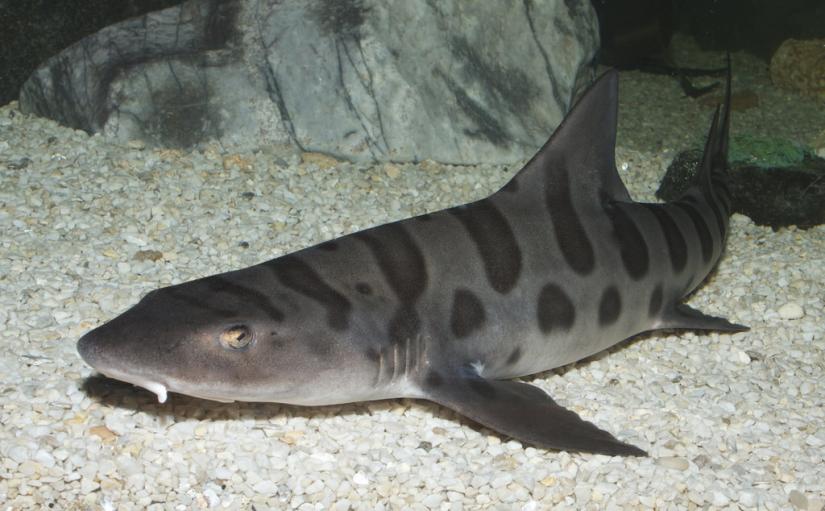
The Leopard Shark (Triakis semifasciata) is a beautiful, medium-sized shark known for its distinctive dark spots and saddle-shaped markings that resemble the pattern of a leopard. These sharks belong to the houndshark family and are often seen cruising calmly along the ocean floor in shallow coastal waters.

Appearance and Physical Features
Leopard sharks are easy to identify because of their unique patterns. Their bodies are usually gray or bronze with dark saddles and spots across their backs and sides.
Key features include:
- Slender body and rounded snout
- Dark spots and bars across the back
- Light-colored underside
- Two triangular dorsal fins
Most adults measure around 4–5 feet long, though some individuals can reach nearly 6 feet.
Habitat and Range
In the wild, leopard sharks are most commonly found in the eastern Pacific Ocean, from Oregon down to the Gulf of California in Mexico.
They prefer:
- Shallow coastal waters
- Sandy or muddy bays
- Estuaries and kelp forests
- Areas near reefs
These sharks often swim close to the ocean floor and may travel in large groups or schools, sometimes numbering in the hundreds.
Diet
Leopard sharks are carnivores that feed mostly on animals living on the seafloor. Their flexible snouts help them dig into sand and mud to find prey.
Common foods include:
- Crabs and shrimp
- Clams and worms
- Small fish
- Octopus
Despite being predators, they are considered harmless to humans and rarely pose any danger.
Reproduction
Leopard sharks give birth to live young through a process called ovoviviparity, where embryos develop inside eggs within the mother’s body.
A female can give birth to 4–33 pups at a time after a gestation period of about 10–12 months. The pups are around 8 inches (20 cm) long at birth.
Fun Facts About Leopard Sharks
⭐ Their spots and stripes help camouflage them against sandy ocean floors.
⭐ They often gather in large schools, sometimes with hundreds of sharks swimming together.
⭐ Leopard sharks can survive more than 20 years in aquariums when properly cared for.
⭐ They sometimes rest on the ocean floor, unlike many sharks that must keep swimming.
⭐ Their teeth are small and designed for crushing shellfish rather than tearing large prey.
Places You Can See Leopard Sharks in Florida
Even though leopard sharks naturally live in the Pacific Ocean, similar species or closely related sharks can be seen in aquariums across Florida. Some facilities also keep leopard hound sharks or other spotted sharks for educational exhibits.
🦈 Boca Raton Area
Boca Aquarium
This intimate educational aquarium allows visitors to see sharks up close in a dedicated shark tank that includes leopard hound sharks and other species. The aquarium focuses on family-friendly marine education and conservation. Check out a full list of exhibits offered at the Boca Aquarium here!
🐠 Other Florida Aquariums to See Sharks
Cox Science Center and Aquarium
This science center features a large aquarium gallery with multiple marine habitats and shark-related exhibits, along with hands-on learning experiences about ocean life.
SEA LIFE Orlando Aquarium
This aquarium hosts several shark species and educational feeding demonstrations that teach visitors about shark biology and conservation.
Why Leopard Sharks Matter
Leopard sharks are important to marine ecosystems because they help control populations of smaller animals on the ocean floor. Their calm nature and striking appearance also make them popular ambassadors for shark conservation and ocean education.
Learning about species like the leopard shark helps people understand that most sharks are not dangerous and play a vital role in keeping ocean ecosystems healthy.